Quick answerWhat is GEO? It stands for generative engine optimisation: making your business easy for AI tools like Google's AI Overviews, ChatGPT and Perplexity to find, understand and trust, so they mention you in their answers. For a small business, GEO is mostly good SEO done properly, plus a few AI-specific checks.
Key takeaways
- GEO means getting your business mentioned in AI answers, not just ranked in a list of links.
- Google says its AI features run on the same systems as normal search. No special tricks or files are needed.
- The basics matter most: AI crawler access, consistent business details, direct answers and real proof.
- You can check where you stand in 15 minutes by asking AI tools your customers' questions.
What is GEO?
GEO (generative engine optimisation) is the work of helping AI tools pick your business when they write an answer. Traditional SEO gets you ranked in Google's list of results. GEO gets you named, linked or summarised inside the answer itself.
The tools that matter for most businesses are:
- Google AI Overviews: the AI summary at the top of many Google searches.
- Google AI Mode: Google's chat-style search.
- ChatGPT: OpenAI's assistant, which now searches the web live.
- Perplexity: an AI search engine that links its sources.
- Gemini: Google's AI assistant.
All of these run on an LLM (large language model), software trained to read and write text. When someone asks "who's the best plumber in Bangor for a boiler repair?", the tool searches the web, reads a handful of pages and writes a short answer. GEO is about being one of the pages it reads and trusts.
How do AI tools decide which businesses to mention?
AI tools search the web, pick sources they can read and trust, then summarise them. If they can't reach your site, or your site doesn't clearly answer the question, you won't appear.
Google AI Overviews and AI Mode
Google is clear on this: its generative AI features use the same core ranking and quality systems as normal search. To be eligible, a page must be indexed and able to show a snippet in normal results. Being eligible doesn't guarantee an appearance. If you rank well for a question, you have a strong chance of being used in the AI answer to it.
ChatGPT and Perplexity
These tools run their own searches and crawlers. ChatGPT uses a crawler called OAI-SearchBot, and OpenAI says sites that block it won't appear in ChatGPT's search answers. It's easy to block AI crawlers without knowing it, through an old robots.txt file or a security setting on the hosting.
GEO vs SEO: what's actually different?
Most of the work is the same. The difference is where you show up and how you measure it.
| Compared | SEO | GEO |
|---|---|---|
| Where you appear | Google's list of results | Inside AI answers (AI Overviews, AI Mode, ChatGPT, Perplexity) |
| What success looks like | Rankings and clicks | Being named, linked or summarised |
| Foundations | Crawlable, fast, clearly structured pages | The same |
| Content | Pages that match what people search | The same, with the answer stated first |
| Extra checks | None | AI crawler access, and how AI tools describe you |
That's why we treat GEO as an extension of our AI search service, not a separate discipline. If someone sells you GEO as a completely new set of tactics, ask what they'd do differently from good SEO.
How to do GEO for a small business: 6 steps
Work through these in order. The first two are quick and fix the most common reasons a business is invisible to AI.
- Let AI crawlers read your site. Open yourdomain.com/robots.txt and check it doesn't block OAI-SearchBot or other AI crawlers. Ask your web host whether any firewall or bot protection is blocking them too. OpenAI says robots.txt changes take about a day to take effect.
- Make your business details match everywhere. Your name, address, phone number, opening hours and services should be identical on your website, your Google Business Profile and every directory you're listed on. AI tools cross-check sources, and conflicting details make them less confident about naming you. Google specifically says to keep Business Profile details accurate for its AI features.
- Answer real questions directly. Start each page and section with a one or two sentence answer, then the detail. Add an FAQ section built from the questions customers actually ask you. "How much does a boiler service cost in Lisburn?" deserves a clear answer with a price range, not three paragraphs of background.
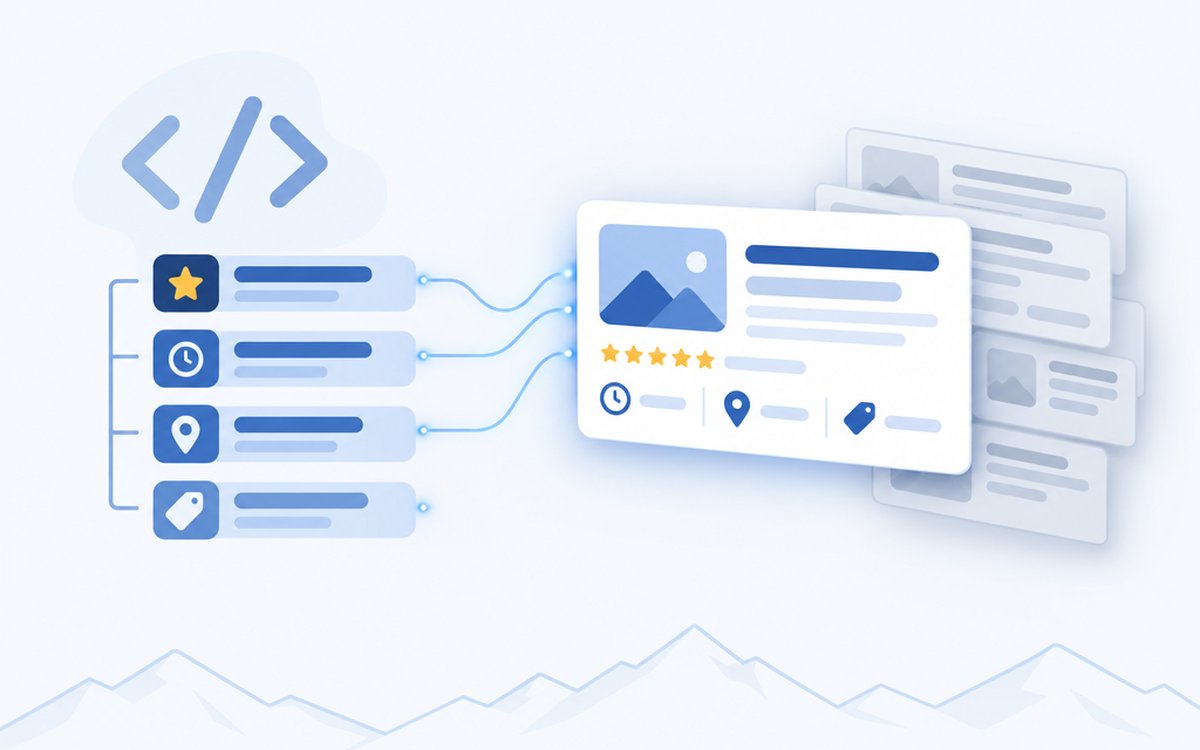
- Add schema markup. Schema is code that tells search engines exactly what your business is, where it is and what it offers. Google doesn't need it to show you in AI answers, but it removes guesswork. Our guide to schema markup for local businesses explains which types to use.
- Show first-hand experience and proof. Google's guidance favours original content from people who've done the work, over generic summaries. Use your own prices, timeframes, photos and results. This is what Google calls E-E-A-T (experience, expertise, authoritativeness and trust).
- Earn genuine mentions elsewhere. Reviews, local press, trade body listings and supplier pages all tell AI tools other people vouch for you. Google warns against manufactured mentions, so skip paid link schemes and fake reviews. Real ones carry more weight anyway.
What GEO can't do
GEO can't guarantee an AI tool will mention you, and no file, plugin or markup forces it to. Anyone promising guaranteed AI rankings is overselling.
A few things to be sceptical of:
- Special AI files. Google says it doesn't need llms.txt files, AI-specific markup or content split into chunks for its AI features.
- Rewriting everything "for AI". Google advises against rewriting pages specifically for AI. Write for your customers and answer their questions clearly.
- Tools that claim inside knowledge. Google is sceptical of third-party tools that claim access to its internal systems. Track results with Search Console and your own manual checks instead.
How to check if AI tools mention your business
Ask the AI tools the questions your customers ask, and look at Google Search Console's generative AI report. Together they take about 15 minutes.
- Make a list of 5 questions a customer would ask before buying from you, with your town in them. For example: "best wedding photographer in Banbridge" or "how much is a kitchen fitter in Portadown?".
- Ask each question in ChatGPT, Perplexity and Google, and note whether you're mentioned, which page is linked, and which competitors appear instead.
- Check what they say about you. Ask "what do you know about [your business name]?" and look for wrong addresses, old services or missing details. Those usually trace back to an out-of-date listing somewhere.
- Open Search Console and look at the generative AI report under Performance. It shows how often your pages appeared in Google's AI features, and which ones.
Repeat the same questions monthly. AI answers change often, and one check tells you little on its own.
Does a local business need GEO?
Yes, but you don't need a separate GEO budget to start. Most of the work is the same work that gets you found on Google, which is why it pays off twice.
Here's what that looks like in practice. When we built the new website for Fisher & Fisher Solicitors, launched in June 2026, we didn't use any AI-specific tricks. The work was standard: a fast site, clear page structure, schema built in and service pages that state what the firm does and where. Their pages appeared in Google's AI Overviews and AI Mode 377 times in June and 1,499 times in October, up 298%. By October they had 275 searches on page 1 of Google, up 82% since launch, and 96 in Google's top 3. You can see more in our client results.
We take the same approach on our own site. At Donard Digital, based in Newcastle, Co. Down, we allow AI crawlers in our robots.txt, use schema markup and publish an llms.txt file for the AI tools that read one. None of it replaces good, clear pages. It just removes the obstacles.
If you rely on local customers, start with your Google Business Profile and the basics in our guide to getting found by customers in your area. The same details feed the AI answers.
Want to know where you stand? Claim Your Free Audit and we'll check how AI tools and Google see your business. It's free, there's no obligation and you keep the findings.
Frequently asked questions
Does GEO replace SEO?
No. Google's AI Overviews and AI Mode use the same ranking systems as normal search results, so a site that ranks well already has a head start. GEO adds a few checks on top, such as AI crawler access and answer-first writing.
What is the difference between GEO and AEO?
AEO (answer engine optimisation) is the older term for getting your content into direct answers, such as featured snippets and voice search. GEO covers AI tools that write their own answers from several sources. In practice the work overlaps almost completely.
Do I need an llms.txt file for AI search?
Not for Google. Google says its AI features don't need llms.txt or any other special file. It takes minutes to add, so we have one on donarddigital.com, but it won't fix a site that's hard to crawl or thin on answers.
How can I tell if ChatGPT recommends my business?
Ask ChatGPT the questions your customers ask, including your town, and note whether you appear and which page it links to. Repeat the test in Perplexity and Google. AI answers change often, so run the same questions once a month.
Is GEO worth it for a small local business?
Yes, because most of the work is what Google already rewards. Keeping your Google Business Profile accurate, writing clear service pages and collecting genuine reviews helps you in normal search and in AI answers at the same time. The extra AI-specific checks are quick.
The bottom line
GEO is the work of getting your business named in AI answers, and for most small businesses it's good SEO done properly. Let AI crawlers in, keep your details consistent, answer real questions first and back it up with proof. Then check what AI tools say about you once a month, and fix what's wrong.